
For ophthalmology departments and clinics
More Visual Field Capacity, Same Team
SONDA replaces the standard perimetry appointment at first intake with a single ten-minute session that any trained member of the eye-care team can run. The perimeter stays for follow-up monitoring; the intake queue moves.
Where the queue forms
The Intake Bottleneck
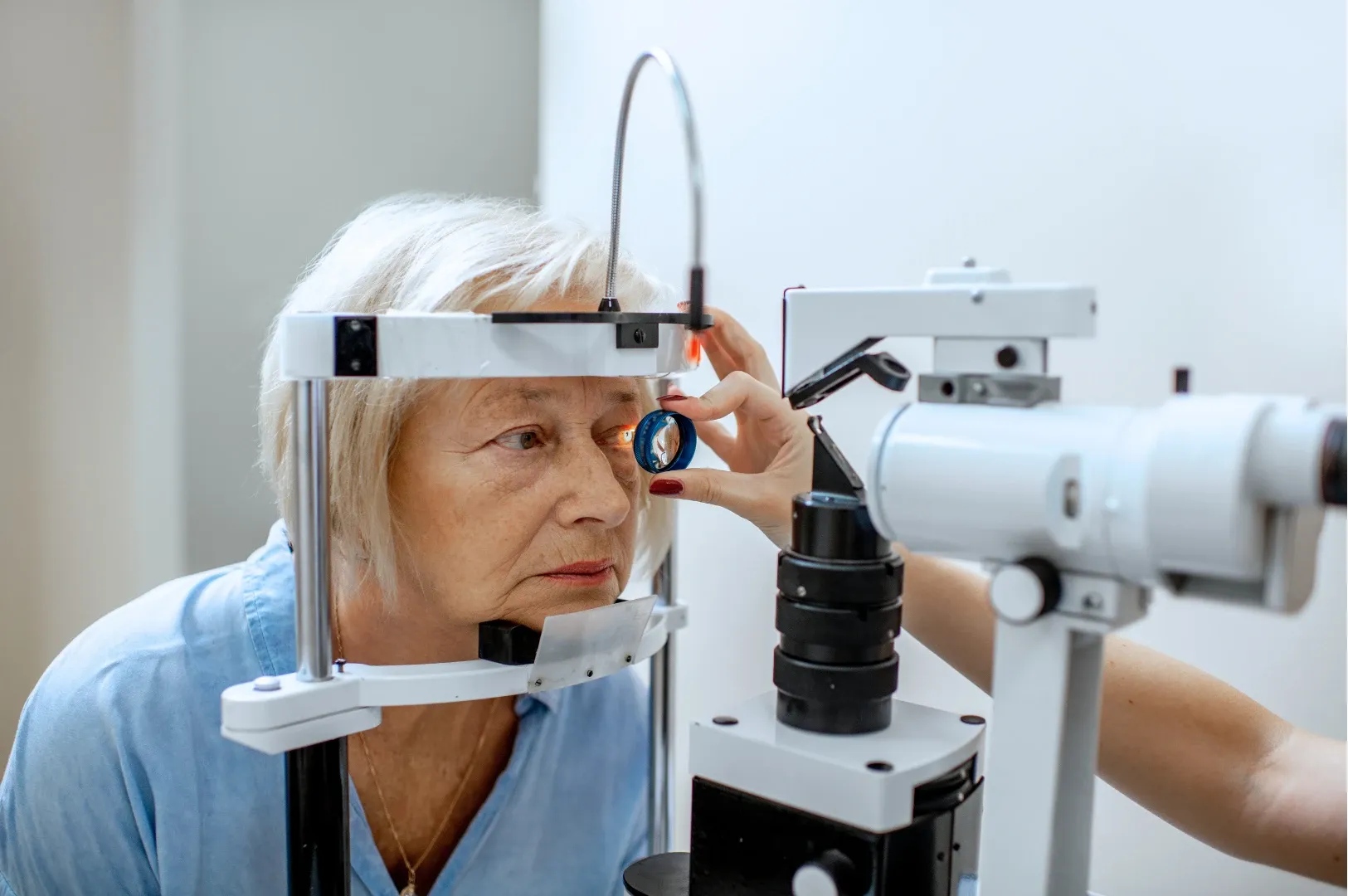
A first visual field examination on the Humphrey Field Analyzer takes a thirty-minute appointment with a technician, and about one in five patients needs a second one because the first result is unreliable. Waiting lists grow at the intake, not at the follow-up.
- Today: 1.2 HFA appointments × 30 min: 36 min
- With SONDA: 1 appointment × 10 min: 10 min
Ten minutes, start to report
How the Appointment Changes
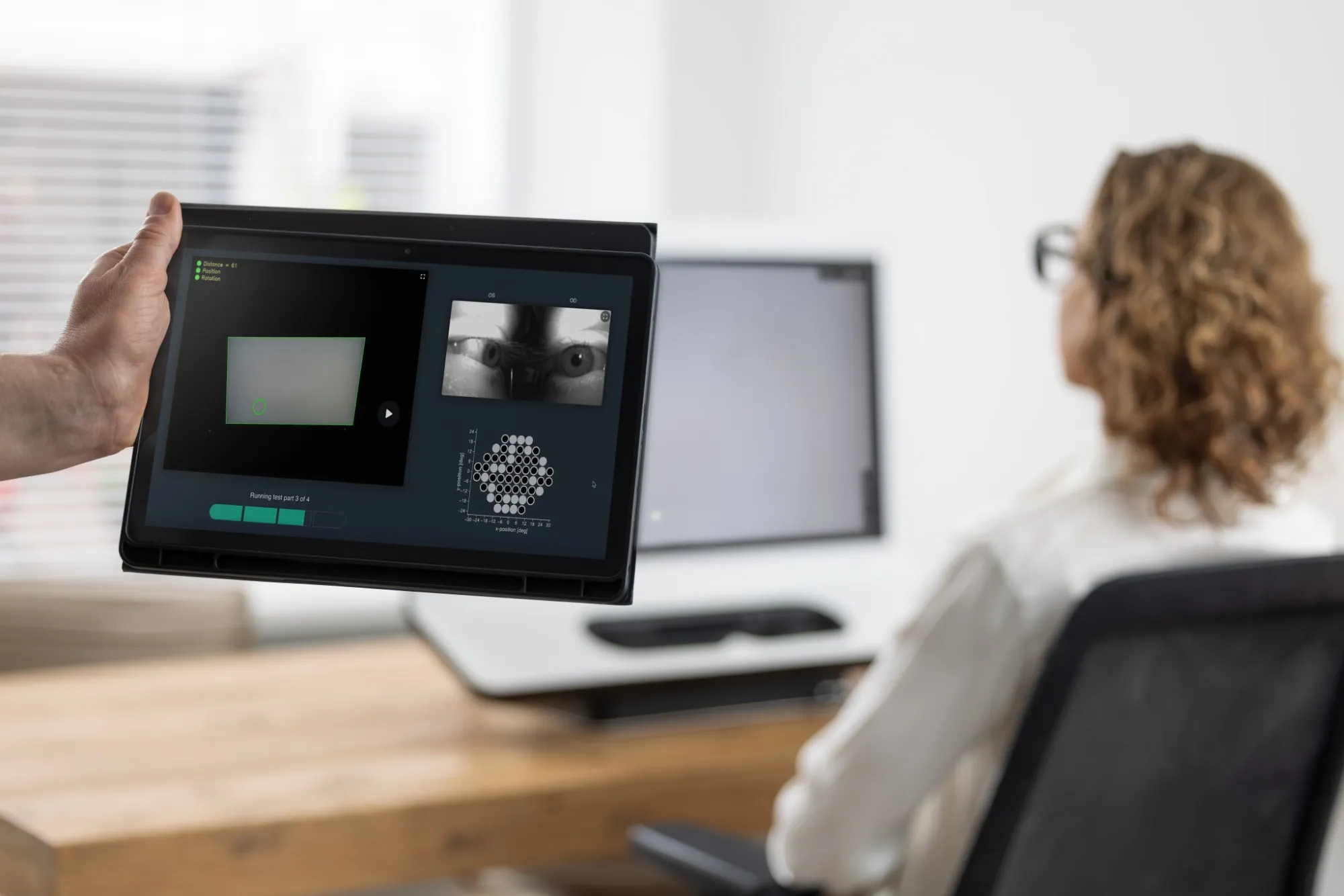
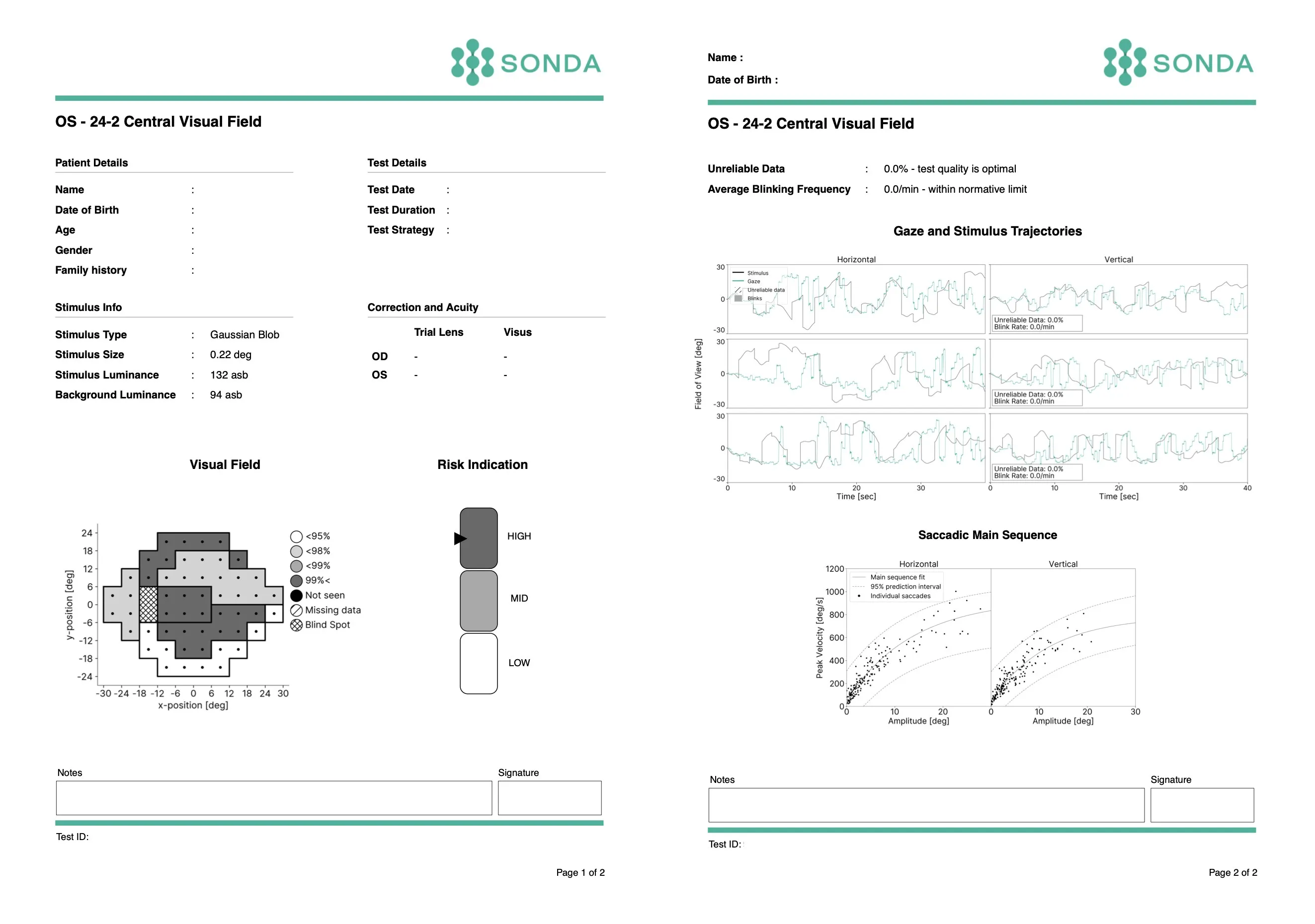
The patient wears the glasses, follows the moving target, and the test is done in 80 to 120 seconds per eye. There is no calibration, no learning effect and no retest cycle: the first measurement is already reliable. The report is ready for the ophthalmologist before the patient has left the room.
- 01

Wear
The patient puts on the SONDA glasses, with corrective lenses matched to their prescription. No calibration, no dilation, no dark room.
- 02
Follow
The patient follows the moving target on the display. 80 to 120 seconds per eye, whatever the severity, and no button to press.
- 03
Report
The visual function report is ready before the patient has left the room, and the ophthalmologist reviews it at the consultation.
Capacity
What It Frees Up
Every intake moved from the perimeter to SONDA gives back the technician’s half hour, and the retest slot with it. The session itself can be run by an assistant after a short training, so technician time goes back to the follow-up monitoring only the perimeter can do. The hours recovered become additional first intakes on the same equipment, with the same team.
215 h
Perimeter hours recovered per year
495
Additional intakes per year
1.9 months
Payback
Example values from a Dutch regional hospital; use the calculator for your own figures.
Calculate your capacity gainEvidence
Evidence Summary
Validated in a pivotal clinical investigation with 100 glaucoma patients and 100 age-matched controls, with no learning effect in a separate test-retest study.
97%
Global AUC
86%
Accuracy, early POAG
96%
Accuracy, moderate POAG
96%
Accuracy, late POAG
r = 0.78
Correlation with Zeiss HFA
2
Independent clinical investigations on glaucoma
In the department
Fitting Into the Department
Installation and training included
SONDA Hub is installed by Reyedar and the team is trained on site, as part of the one-off purchase.
Reports you can export
Every session produces a structured visual function report that can be exported for the patient record.
Data under the hospital’s control
Test data stays under the hospital’s control, in line with its own data-protection policy.
Certified medical devices
SONDA software is CE-marked as a Class IIa medical device under MDR 2017/745. SONDA Hub hardware is a Class I device compliant with EN 60601. Both are manufactured under an ISO 13485 certified quality management system.
Talk to us about a pilot
See how the intake queue moves in your own department, with your own numbers.